

Whoa! So I was poking around a Solana collection the other day. Something felt off about the floor price movements and the wallet clusters, honestly. My instinct said there were wash trades, though at first I couldn’t prove it. Initially I thought it was just volatility, but then patterns emerged when I sliced timestamps and token histories.
Really? I bookmarked several explorers and then started poking at token transfers, creators, and the mint timeline. That first pass felt scattershot—too many tabs, too much noise. On reflection I built a checklist: provenance, concentration, transfer cadence, and bid/ask spreads across markets. Actually, wait—let me rephrase that: not just a checklist but a quick triage routine you can run in five minutes per project to spot red flags.
Here’s the thing. A good blockchain explorer for Solana is half database and half detective tool. You need transaction decoding, token metadata parsing, label layers for wallets, and an easy way to pivot from a mint to every subsequent sale. I prefer explorers that offer CSV exports and robust API rates because somethin’ you want to automate, not babysit. My rule of thumb: if the explorer locks you into a cramped UI or hides raw logs, it’s a warning sign.
Whoa! Let me walk you through a practical example—no fluff. Take a hypothetical collection with 5,000 mints where the first 300 were airdropped to a few wallets that then fed liquidity into a single market maker. At first glance volume spikes look healthy and the floor rises, but wallet clustering and simultaneous sells within seconds tell a different story. I ran this pattern against on-chain metrics and saw wash trade fingerprints: mirrored txs, sequential small sells, and created dust transfers to pad activity.
Seriously? Yeah—people do that on Solana, and it’s not subtle. Tools that help: token holders heatmaps, timeline replay, and labeled wallet searches. I like quick provenance checks because you can drill to mint transactions and see holder continuity without waiting ages for indexers to catch up. Check the creator address, check royalties, and also scan for repeated transfers tied to one IP or cluster.
Hmm… Analytics platforms complement explorers by aggregating metrics like active holders, concentration (top 10 wallets), and realized P&L over time. Those summaries save time, but they can also gloss over microstructure. So I always cross-verify: if a dashboard shows organic growth, I trace a sample of wallets back through the explorer to confirm real user distribution. On one hand dashboards are efficient, though actually there are edge-cases where only raw tx parsing reveals wash trades or fake liquidity.
Here’s the thing. If you’re a collector, build a simple checklist: provenance, transfer cadence, holder distribution, and marketplace spread. If you’re a trader, add realized volume, bid depth, and on-chain arbitrage spots. If you’re a creator, monitor minter diversity and the early secondary market—those first 48 hours tell you a lot. I’m biased, but tooling that gives you both analytics and raw explorer access is the best compromise.
Okay, so check this out— I once flagged a project where the floor jumped 30% in an hour and then reversed just as fast. My instinct said coordinated buys, and the explorer timeline confirmed it: three wallets moved tokens in lockstep, later reused as wash trades to prop prices. I reported the pattern to community channels and the marketplace delisted suspicious offers within a day. That felt good, but I also learned that reporting depends on readable evidence, which only a solid explorer supplies.
Where to start and one quick recommendation
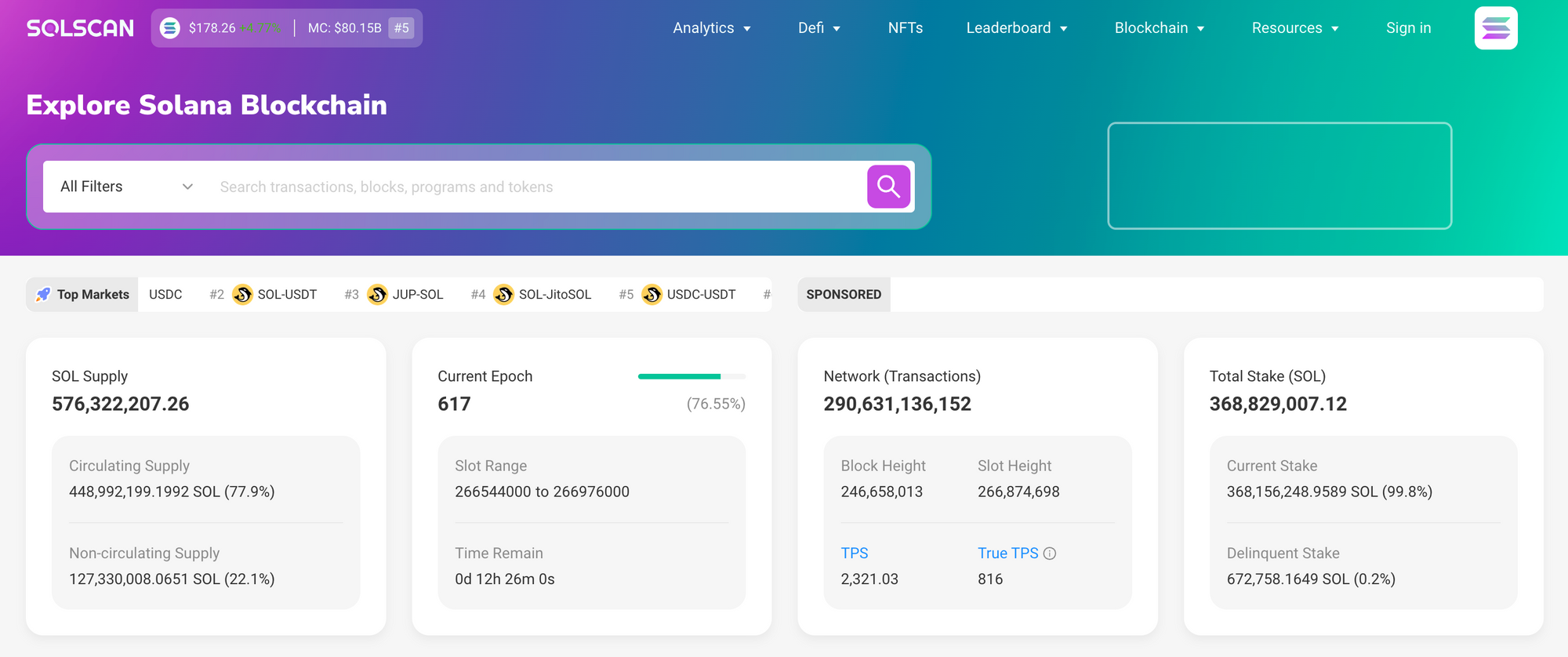
If you want a practical first step, do this: pick a collection, export recent transfers, then map holder overlap for the top 50 wallets. For quick provenance checks and drilldowns I often point folks to solscan because it balances speed with readable transaction detail. (oh, and by the way… CSV exports are your friend.)
Wow! Privacy on Solana is limited, so labeled explorers make investigations quicker. But labels can be incomplete, and heuristics sometimes misclassify the same wallet that belongs to a market maker as a collector. So always keep a skeptical lens and corroborate with off-chain signals: Twitter, Discord, and known team statements. I’m not 100% sure about every heuristic, but combining on-chain pattern recognition with community intelligence raises confidence a lot.
Honestly, it’s a mix of art and engineering. If you care about NFT health on Solana, learn a few explorer tricks, then formalize a reproducible triage routine. You’ll save time and avoid getting stuck chasing false positives. There are good tools, and there are smoke-and-mirror dashboards—learn to tell them apart. Somethin’ to leave you with: start small, repeat your checks, and keep an eye on provenance—your wallet will thank you.
FAQ
How do I tell real volume from wash trading?
Start by sampling wallet histories. Look for mirrored transactions, repeated tiny transfers, and wallets that only interact within a small cluster. Cross-check timestamps across marketplaces and check whether buyers later sell to the same cluster; that’s suspicious. Also use off-chain signals like community chatter—if many accounts suddenly push a floor without organic social engagement, be careful. I’m biased toward evidence that can be reproduced in the explorer, because screenshots alone often miss context.